Manjimup in winter
There is something undeniably magical about a road trip down south during the crisp heart of winter. Leaving the city bustle of Perth behind, the three-and-a-half-hour drive toward Manjimup slowly unfolds into the kind of scenery that makes you want to roll the windows down just a crack—even with a chill in the air. Passing through the fringes of the Margaret River region and into the towering karri forests of the Southern Forests, the winter landscape feels quiet, lush, and deeply atmospheric, with rolling pastures and misty paddocks setting the mood for truffle season.
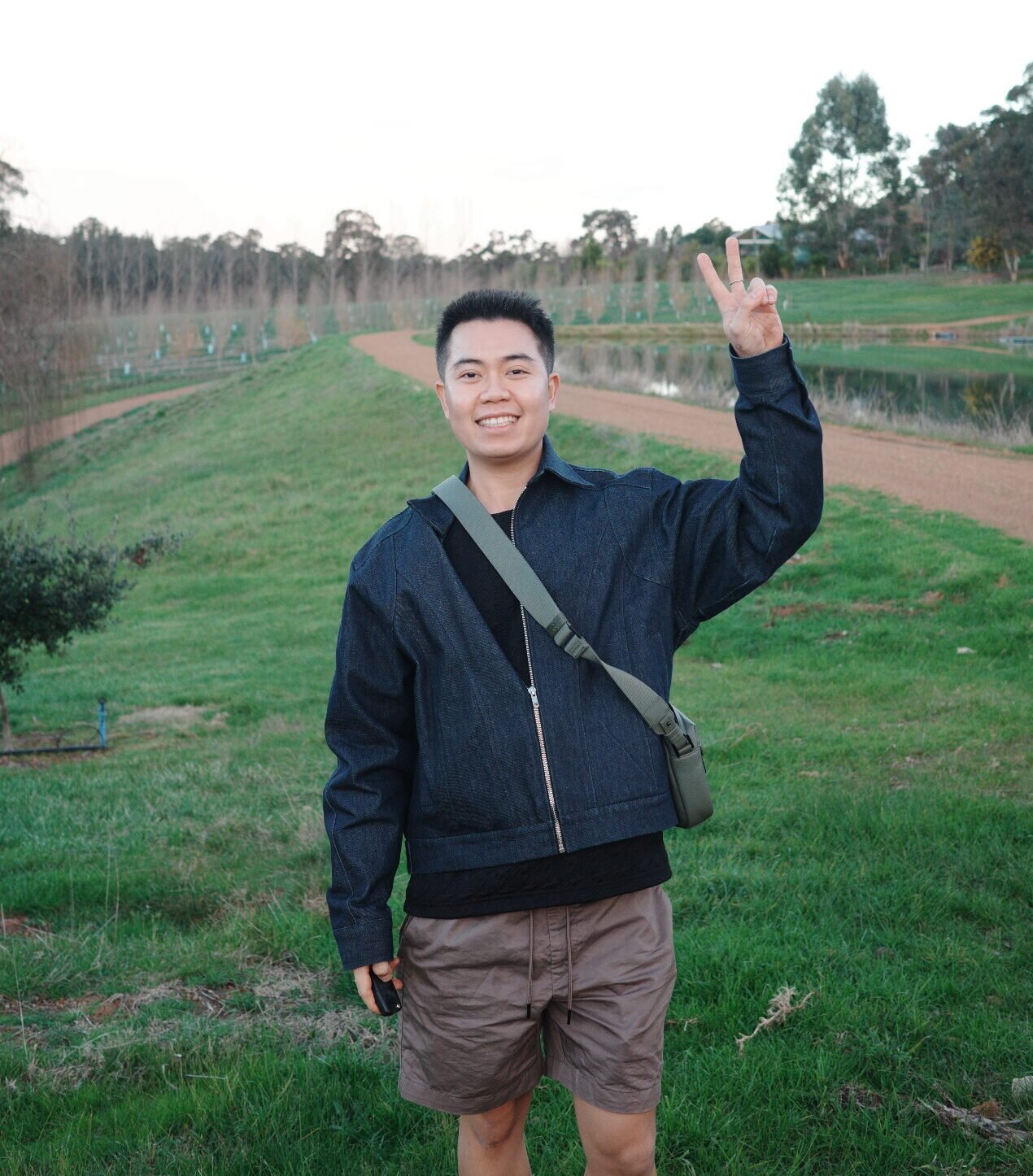
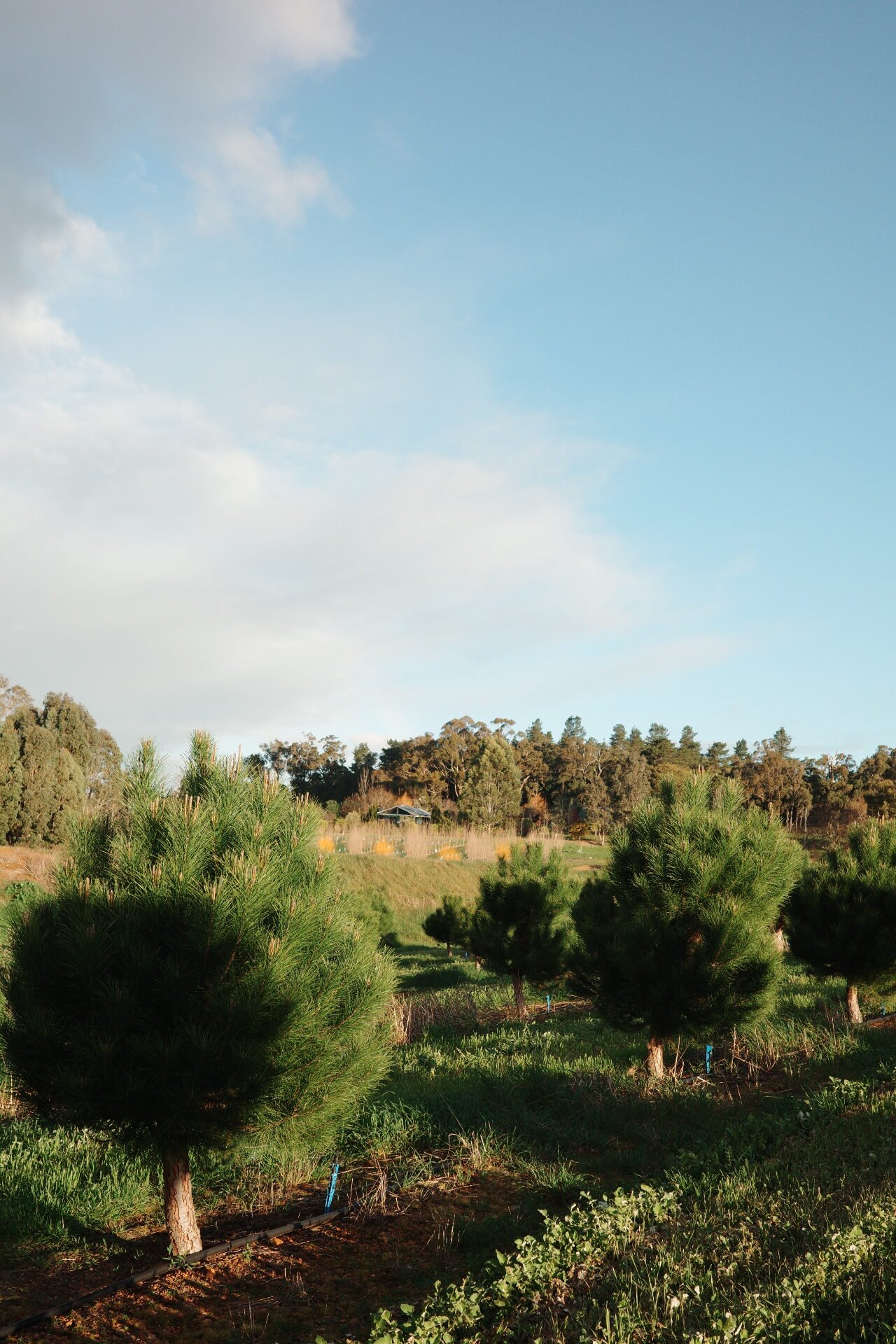
Tucked along Pozzi Road just outside of Manjimup, Australian Truffle Traders feels wonderfully removed from the rest of the world. Set on a sprawling 65-acre rural property nestled between Manjimup and Bridgetown, the farm sits right in the heart of Western Australia’s Southern Forests—a region defined by towering native karri trees, rich red-brown loam soil, and crisp winter rainfall. Surrounded by dense bushland and rolling countryside, the view across the property is nothing short of serene: rows of inoculated oak and hazelnut trees stretching out beneath wide winter skies, framed by a backdrop of native forest.
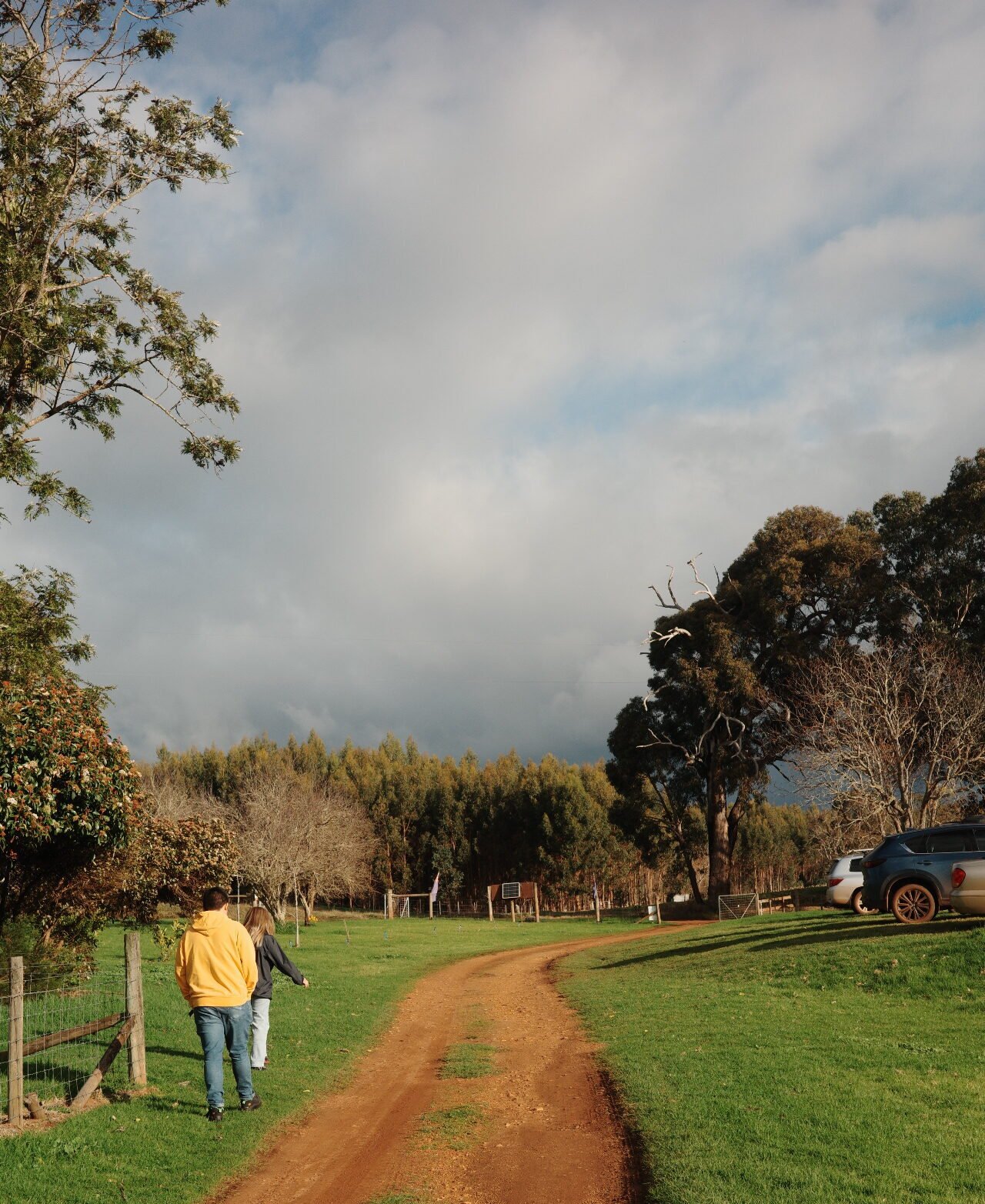
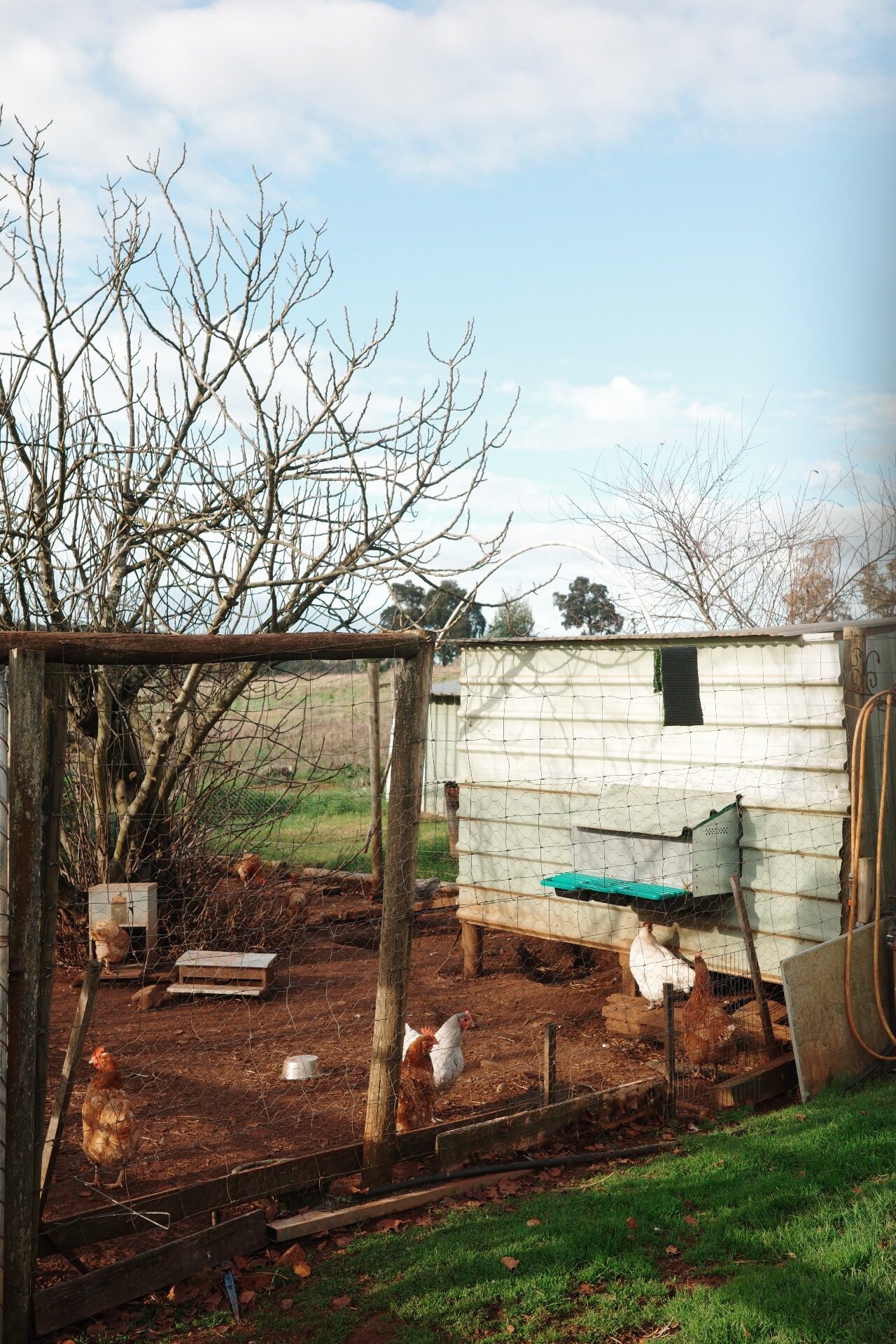
Despite supplying fresh black Périgord truffles to acclaimed restaurants around the globe within 24 to 48 hours of harvest, life on the farm feels remarkably grounded, intimate, and unhurried. Run by Gavin and Mel Booth, the property operates with the authentic warmth of a true family farm rather than a commercial tourist attraction. Between the quiet hum of the on-farm grading shed—where every freshly dug truffle is carefully brushed, graded, and packed—and the excited energy of the truffle dogs trotting between the paddock and the orchard, the entire place radiates a peaceful, salt-of-the-earth rhythm. Standing there in the quiet of the trees, taking in the fresh forest air and the stillness of the valley, it is easy to see why this pocket of Manjimup has become the truffle capital of the Southern Hemisphere.
By the time we arrived at Australian Truffle Traders, the weather had settled into that quintessential south-west winter afternoon: bright, clear skies paired with a brisk, breezy chill that instantly wakes you up. Bundled in coats and boots, we were there for one of winter’s most coveted culinary adventures—heading out into the truffière alongside a team of extraordinarily talented truffle dogs to unearth Western Australia’s famed black Périgord and white truffles straight from the soil.
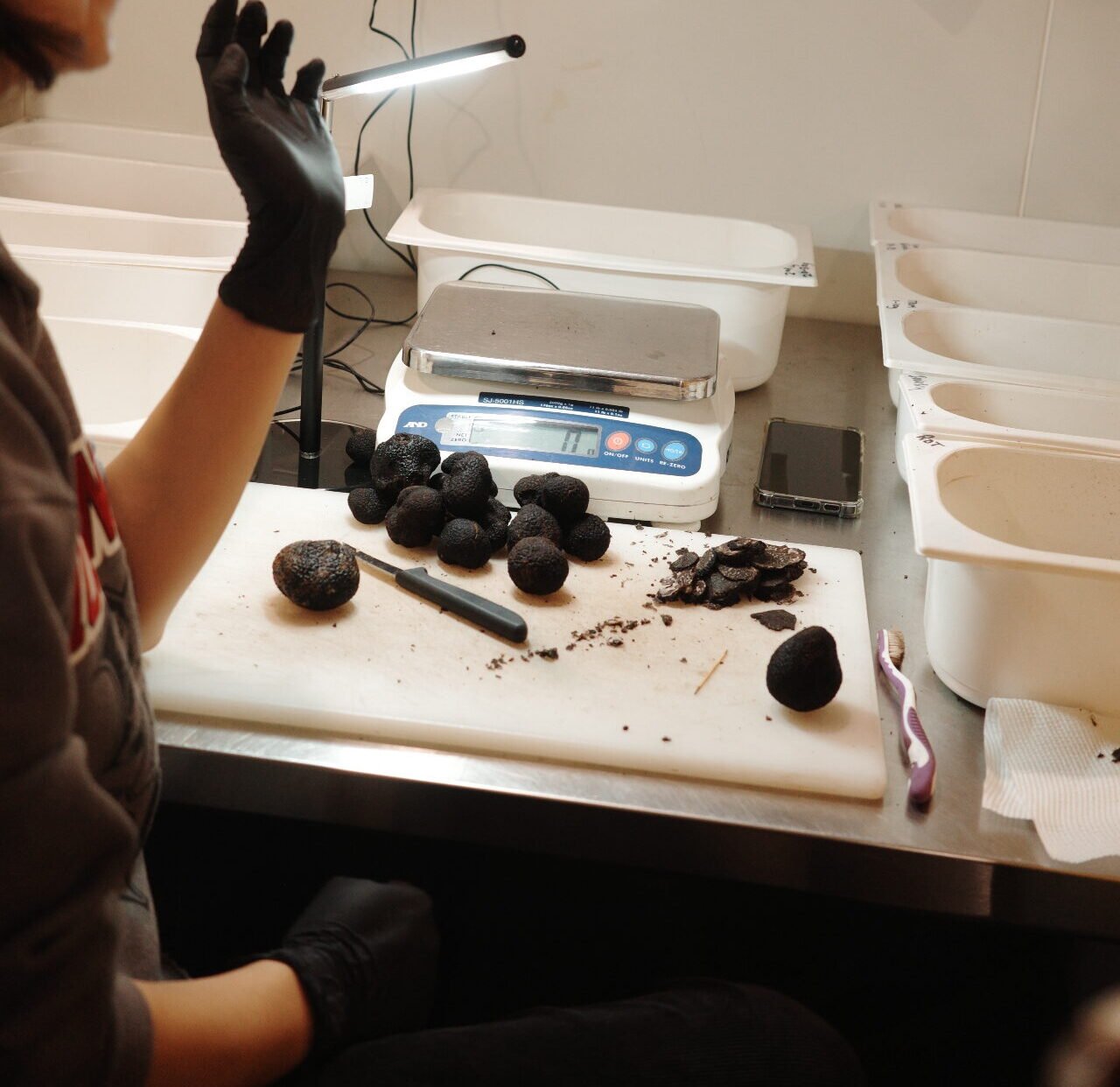
After stepping out of the breezy orchard, the tour moves indoors into Australian Truffle Traders’ purpose-built on-farm grading facility—the quiet, clinical engine room where muddy forest finds are transformed into export-grade culinary treasures. Watching the post-harvest process up close gives you an entirely new appreciation for why Manjimup truffles command space on Michelin-starred menus from London and Paris to Tokyo and Singapore.
Because truffles are sold strictly by weight, every single specimen is meticulously washed and brushed free of Manjimup’s rich loam so that buyers pay for 100% pure truffle rather than lingering soil. Once clean and dry, each truffle is individually inspected by hand, nose, and eye—checking firmness, aroma intensity, and internal marbling (often via a tiny, precise nick known as “canifage” to confirm the deep black-and-white veined interior of peak ripeness) before being sorted into a strict tiered grading system:
Into the Truffière: Watching the Dogs Work
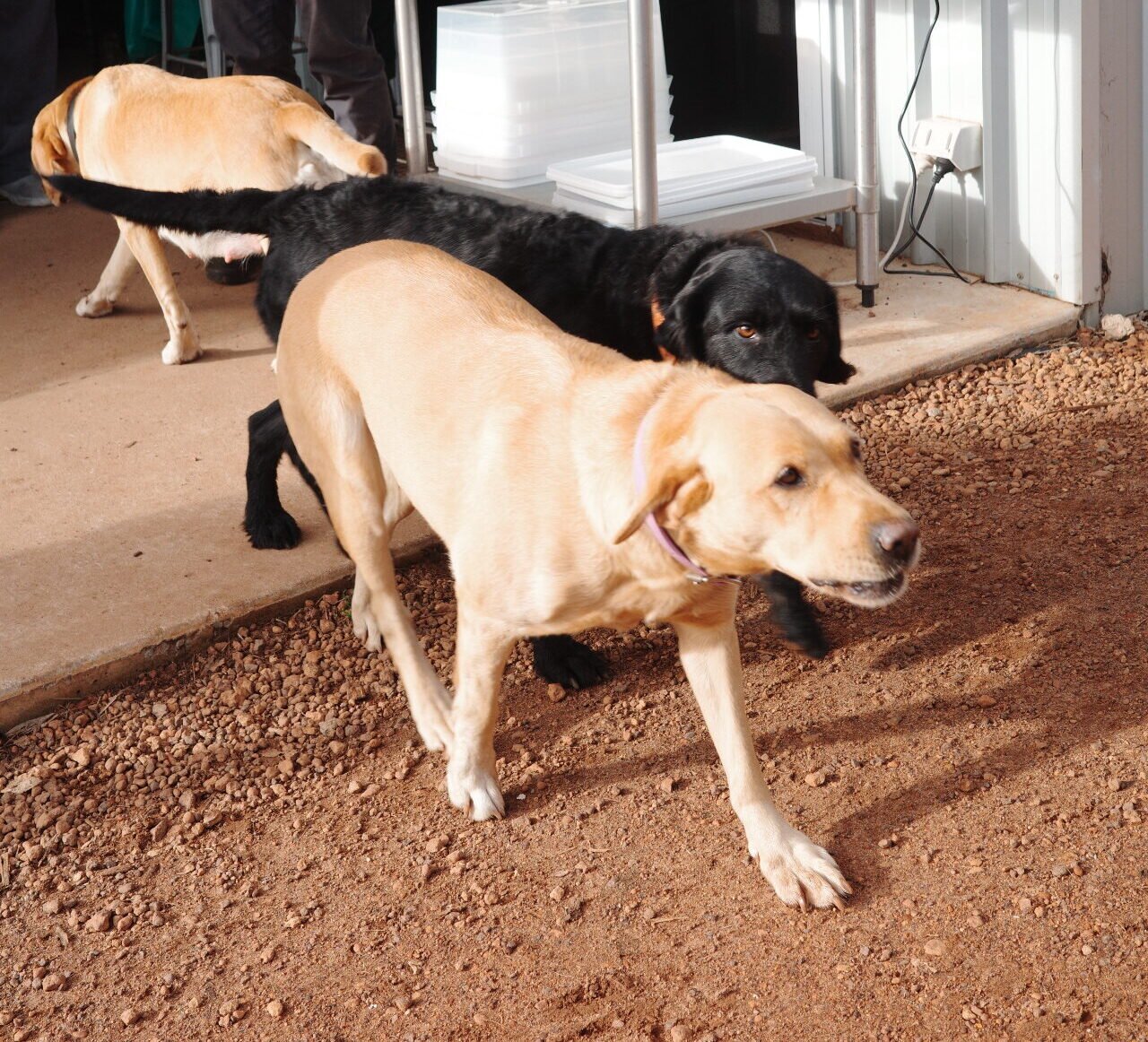
At Australian Truffle Traders, the truffière is laid out in neat, endless rows of oak and hazelnut trees, their winter-bare branches framed against the bright sky while the breeze rustles through the grass underfoot. Unlike traditional European hunts that once relied on pigs, modern truffle hunting belongs entirely to the dogs—and watching them work is half the magic. The dogs at Australian Truffle Traders are specially trained for hunting the rare white truffles.
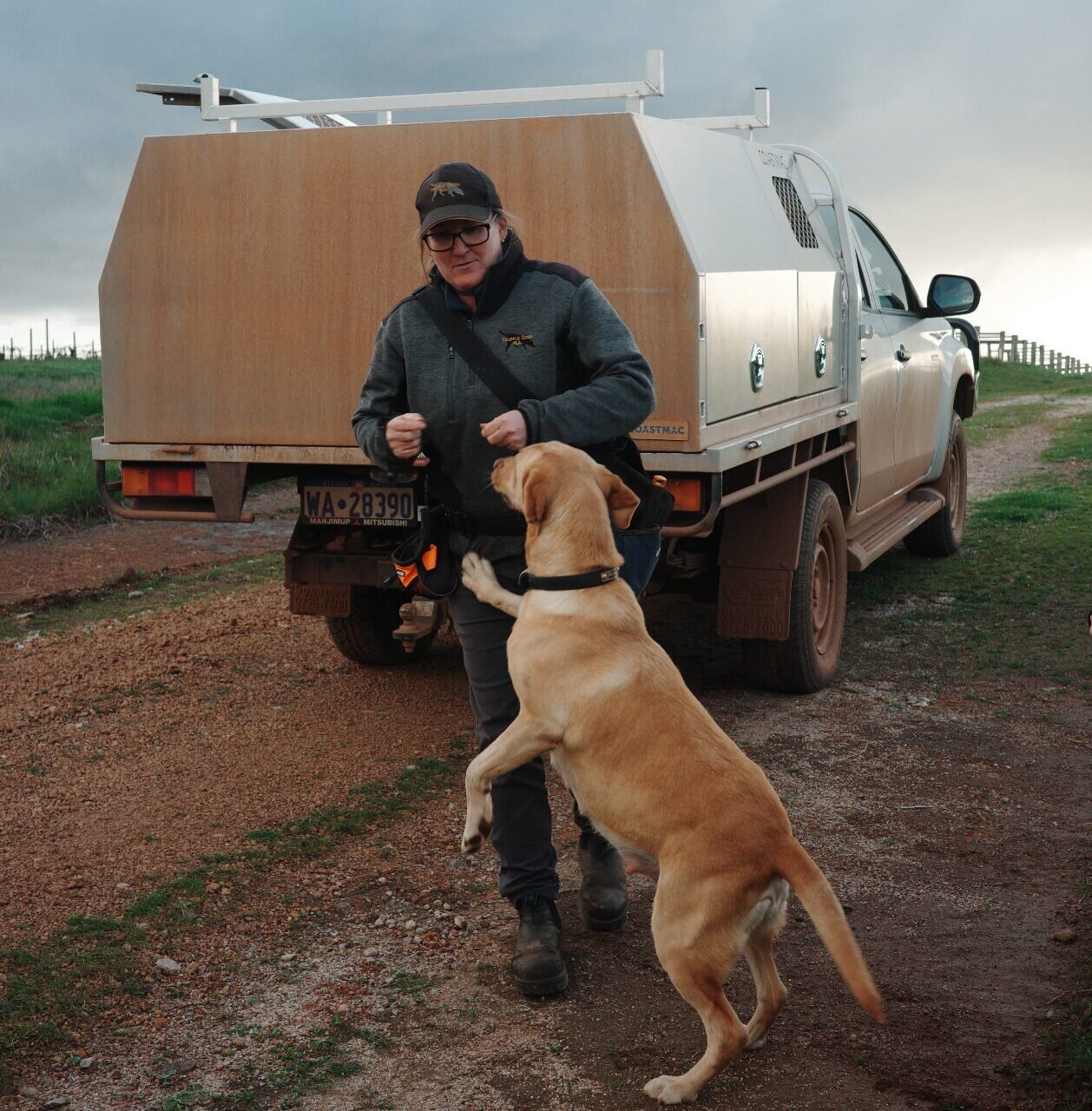 Treats before the work commences!
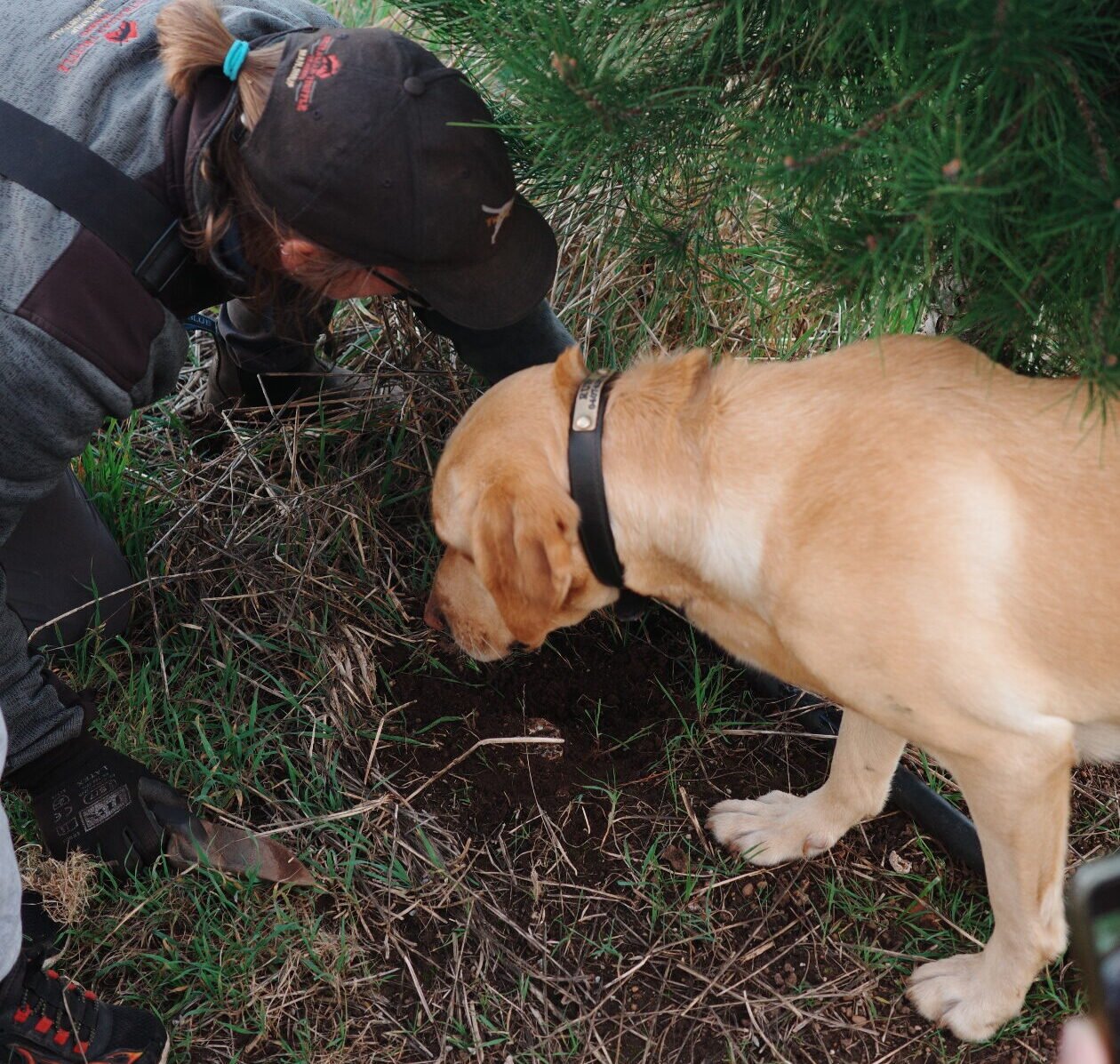
The moment they are given the cue, their entire demeanor transforms. Tails wagging with pure focus, they zigzag effortlessly between the tree trunks, noses hovering just inches above the damp, loamy soil. For them, this isn’t work; it is the ultimate game of hide-and-seek. You can see the exact second a dog catches a scent—a sudden pause, a sharp turn back toward the base of an oak tree, and then a gentle, deliberate pawing at the earth to signal a find.
Kneeling beside the spot where the dog has marked, the handler (Mel) carefully brushes away the top layer of leaves and rich Manjimup soil by hand. Within seconds, that unmistakable, intoxicating aroma rises from the ground—earthy, musky, sweet, and deeply complex—long before the dark, bumpy exterior of a black Périgord truffle even breaks the surface. Each unearthing feels like uncovering buried treasure, rewarded immediately with a treat and plenty of praise for the dog before they bound off down the row to track down the next one.
The First Breath: Experiencing the Aroma of a Freshly Unearthed White Truffle
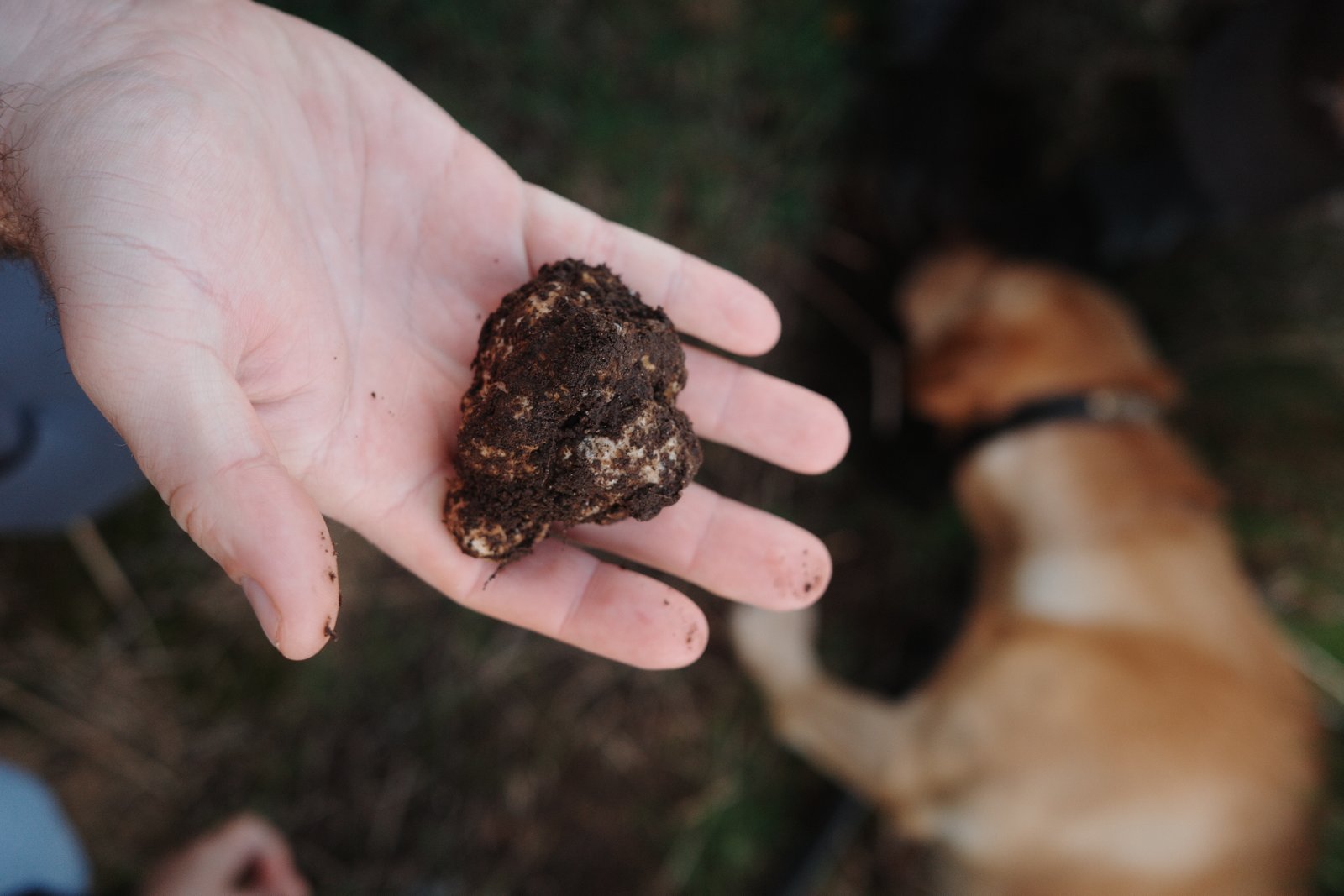
If black truffles are warm, earthy, and comforting, catching the first scent of a freshly unearthed white truffle is an entirely different sensory jolt—and easily one of the most unforgettable moments of the afternoon. The second it is lifted free from the cool, damp Manjimup soil, the aroma hits the crisp winter air all at once, sharp, heady, and impossibly vivid.
Unlike the slow, musky richness of its black counterpart, a fresh white truffle smells wildly complex and electric. There is an immediate, pungent burst of sweet roasted garlic and shallots, quickly followed by deeper, layered notes of aged parmesan, damp forest floor, wild honey, and a faint, intoxicating hint of musk. Held right in the palm of your hand—pale, smooth, and irregular like a river stone dusted in dark loam—the scent clings to your fingers and seems to hang in the breeze around you, almost overwhelming in its freshness.
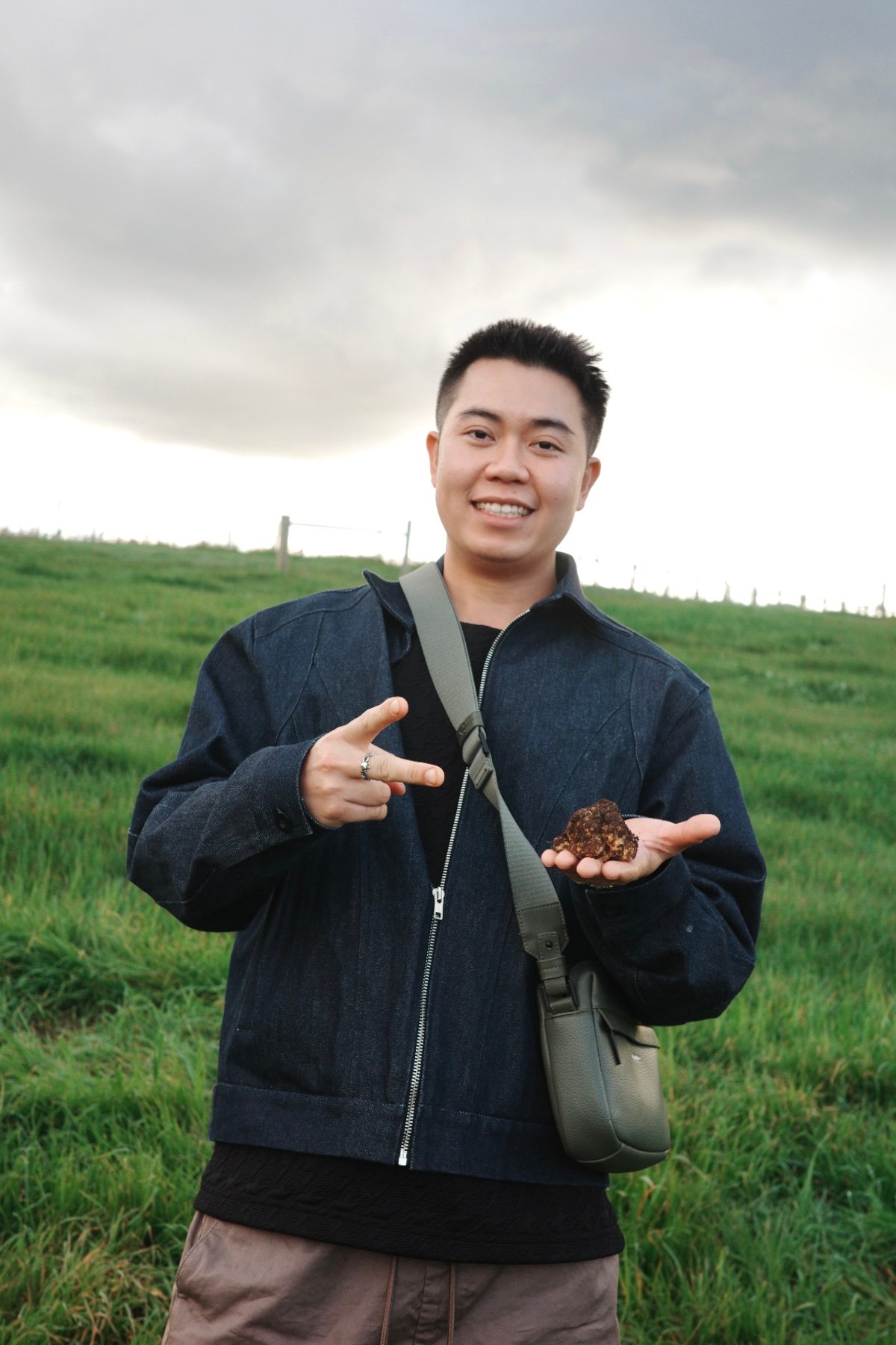
Experiencing that aroma seconds after harvest, before air or refrigeration has dulled a single volatile note, feels like a rare culinary privilege. Even a tiny, freshly dug white truffle commands the entire room, transforming a quiet moment in a chilly orchard into pure, sensory magic—the kind of lingering scent memory that stays with you long after the drive back to Perth.
Planning Your Visit: Practical Tips for a Manjimup Truffle Hunt
By the time you pile back into the car for the drive north, carrying a carefully wrapped truffle (or two) and a coat that still smells faintly of damp karri forest and sweet earth, you realize a Manjimup truffle hunt is one of those rare winter outings that engages every sense. It is unhurried, deeply tactile, and refreshingly authentic—a reminder of just how special Western Australia’s Southern Forests region is when the rest of the state is hibernating indoors.
When to Go: Truffle season in Manjimup runs strictly through the winter months, from June to August (with peak harvest typically hitting mid-June through July). If you want to make a full weekend of it, aim for late June to coincide with the Truffle Kerfuffle festival in Manjimup, or July for the region’s Cabin Fever winter festival.
Booking Advice: Because hunts operate on select days (typically Wednesdays, Saturdays, and Sundays during the season) and group sizes are kept intimate, spots sell out well ahead of winter. Book directly through the Australian Truffle Traders website at least a few weeks in advance—especially if you are aiming for a weekend session.
What to Wear: Even on bright, sunny winter afternoons, the breeze cutting across the open orchard rows has a real bite. Dress in warm layers you can easily peel off while walking, bring a waterproof jacket in case a passing shower rolls through, and wear enclosed, sturdy shoes or boots—Manjimup’s rich loam soil gets soft and muddy after winter rain.
Bringing Truffles Home: You can purchase freshly graded truffles straight from the farm after your tour. Bring a small insulated cooler bag or an airtight glass jar for the three-and-a-half-hour drive back to Perth—and toss a carton of fresh eggs or a block of unsalted butter inside with your truffle so they absorb that incredible aroma on the journey home.
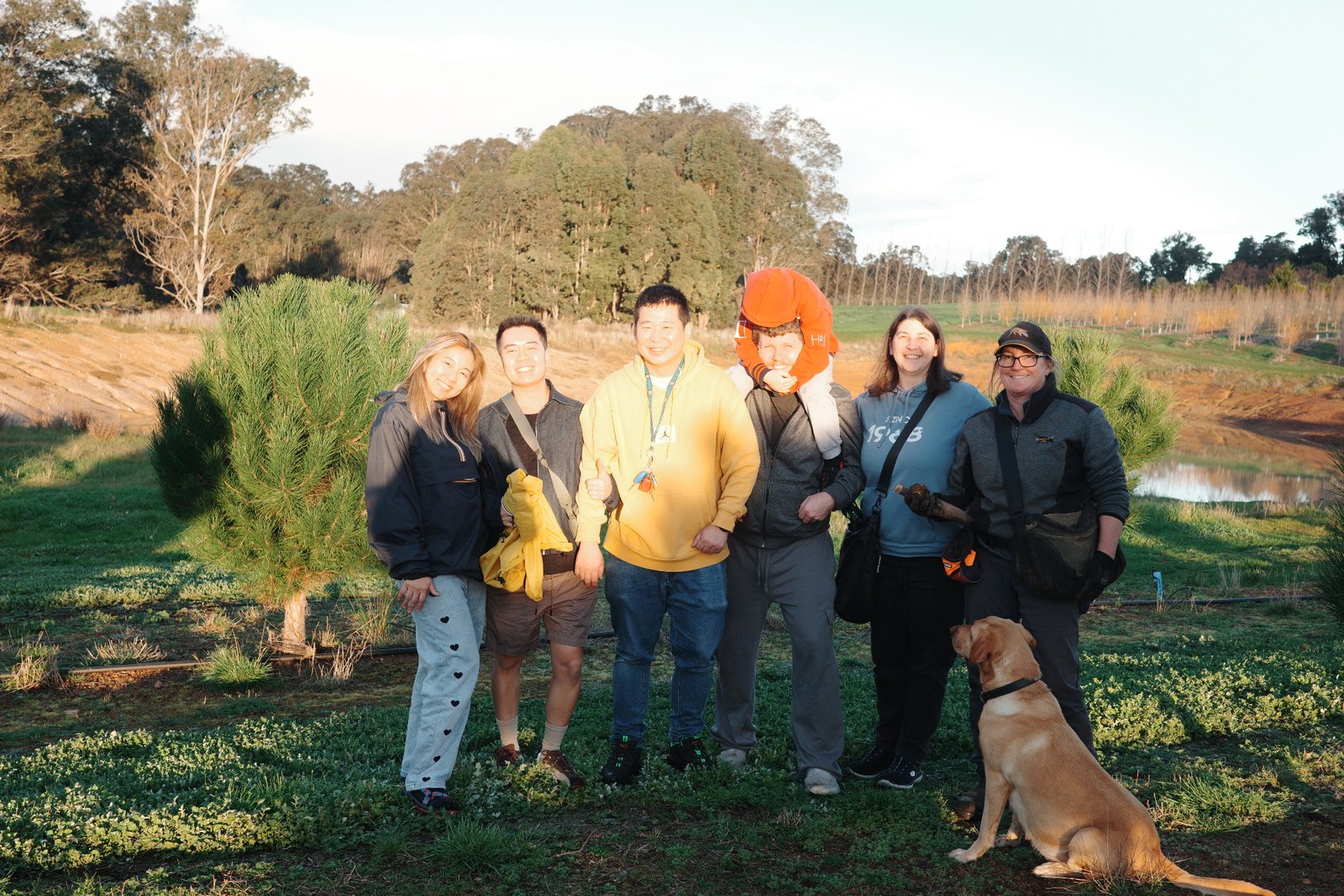
Have you ever made the winter road trip down to Manjimup—or been lucky enough to watch truffle dogs work their magic in person? Whether you are a fellow truffle lover with a favorite way to shave them at home, or you are currently dreaming up a Southern Forests winter escape of your own, I would love to hear about it. Drop a comment below and let me know your favorite truffle dish or if a hunt in karri country is on your bucket list!